
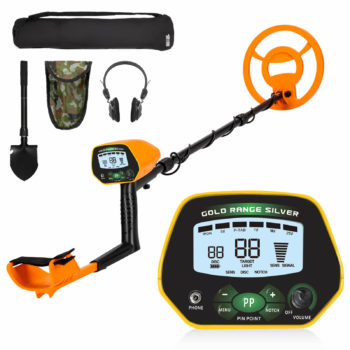
Brief introduction on metal detector and public archeology
Table of Contents
A brief introduction on metal detector
As a high-tech product, metal detectors have been widely used in archaeological prospecting due to their superior performance, and gradually compared with
The combination of public archaeology has become an important weapon for the excavation and protection of cultural relics. This article introduces the archaeological exploration principles of metal detectors

With the rise and development of scientific and technological archaeology, since the 1950s, shallow geophysics (Near-surface Geophysics) and other detection methods have been introduced into archaeological prospecting, and geophysical prospecting referred to as geophysical prospecting, has gradually formed. There are many types of archaeological geophysical prospecting methods, but they are limited by the physical characteristics of the detected objects. The most commonly used methods are the resistivity method, an electromagnetic method, and the ground-penetrating radar method. As a specific application of the electromagnetic method, Metal Detector is an instrument specially used to detect metal. Because in the archaeological excavation, quite a lot of antiquities are metal products. For example, gold and silverware, coins, bronzes, and other precious metal artifacts representing wealth and power, as well as metal weapons of the cold weapon era such as swords, arrowheads, cannons, and shells, as well as hoes, shovels, axes, saws, and chisels, are necessary for production and life. Indispensable metal tools. Therefore, metal detectors have gradually become one of the important exploration tools for archaeologists. In recent years, the “treasure hunt” has emerged in the West, which has further accelerated the research, production, and promotion of metal detectors, especially underground metal detectors in the field of archaeology.
History of metal detector
Overview of metal detectors The first metal detector was born in 1960 and was initially mainly used in industry and mining to check the purity of minerals. After more than 50 years of development, metal detectors have undergone several generations of detection technology changes, from the initial signal simulation technology to continuous wave technology, and then to the current digital pulse technology. The sensitivity, resolution, accuracy, and performance of metal detectors have all undergone a qualitative leap, and the application areas have been extended to many industries with the needs of social development, such as security, food, daily chemical, mining, archaeology, etc. At present, metal detectors can be roughly divided into the following types according to their functions and market applications: channel metal detectors (metal detection doors or security gates), handheld metal detectors, portable metal detectors, desktop metal detection Detectors, industrial metal detectors, underwater metal detectors, and underground metal detectors.
Metal detectors are generally composed of high-frequency oscillators, oscillation detectors, audio oscillators, power amplifiers, and other parts, and are equipped with power supplies, indicator meters, and sound indicators. In actual operation, the metal detector uses the principle of electromagnetic induction. First, it uses alternating current to generate a rapidly changing magnetic field through a coil. Then, the lines of force of this magnetic field pass through the metal object and form eddy currents on its surface. Next, the eddy current will generate a secondary magnetic field, which in turn affects the original magnetic field and produces a signal that the instrument can receive and recognize. Finally, the signal is processed and amplified to deflect the pointer of the indicator and simultaneously drive the audible indicator to emit an audible signal.
The superiority of metal detectors in archaeological exploration
Compared with many traditional archaeological exploration methods, metal detectors have the advantages of accurate positioning, wide detection, strong resolution, simplicity, and efficiency. And its superior performance is mainly manifested in three aspects: target positioning function, target sounding function, and target discrimination function.

Target positioning function
Before digging the target, you must first determine the exact location of the target. Generally speaking, after the large-scale geophysical exploration is over, metal detectors are used to detect the target area in a grid format, and the range of the target to be measured is gradually reduced according to the size of the acoustic signal, until a high-frequency acoustic signal is emitted. Combined with sounding and screening functions, you can accurately dig out valuable targets. It should be noted that the electromagnetic field generated by the metal detector is affected by the eddy current formed on the surface of the metal body. For the same metal body, the strength of the acoustic signal it produces is only positively related to the size of its surface area, not to its quality. Even the same metal body may produce different acoustic signals under different conditions. Therefore, the metal detector can only determine the surface area of the metal, but cannot infer its mass and volume.
Target sounding function
Some metal detectors are marked with a scale value indicating the depth on the indicator. When a specific target is found, the indicator can indicate the approximate depth of the target. Its basic principle is: take a fixed metal body as the standard, refer to the table head instructions caused by the metal body at different depths, and delimit different depth indication values. This type of metal detector is more suitable for finding metal objects with similar shapes, such as metal coins, bullets, etc. If the measured target is of irregular shape, the accuracy of its sounding function will be greatly reduced. The sensitivity of metal detectors mostly depends on the size and conductivity of the metal particles. In addition to the shape, the depth of detection also has a great relationship with the volume and weight of the detected metal. For example, in underground metal detectors used in archaeology, their sensing signal decreases with the increase of the detection range, and the detection depth increases with the increase of the area and volume of the target.
Target discrimination function
In the past, metal detectors had a low degree of discrimination, and when detecting minerals in the soil, they would also send out acoustic signals, which would mislead the detection results. This phenomenon of soil mineralization is called “mineralization reaction”. For this reason, the old metal detectors are powerless in places with complex geological structures. The current underground metal detectors have not only eliminated the impact of the “mineralization reaction”, but can also distinguish the value of the measured target based on the sound signal with special audio emitted when the instrument detects the target. The target discrimination function of the metal detector utilizes the difference in electrical conductivity (or conductivity) and resistivity of different metals. Noble metals such as silver, copper, and gold have high electrical conductivity and can produce A sound signal with a higher frequency, and a large-distance pointer deflection is displayed on the indicator at the same time. On the other hand, the conductivity of ordinary metals such as steel is low, and the acoustic signal produced is weak, which causes little deflection of the pointer. Based on this difference, the indicator area of different metals can be delineated on the indicator table for metal identification.
Metal detectors and public archaeology
The term “Public Archaeology” was first proposed by American archaeologist Charles McGimsey in “Public Archaeology” published in 1972. Its rise is actually to deal with the relationship between archaeology, the public (social groups other than professional archaeologists), and the national government, and integrate archaeology into a wide range of social relations so that archaeology is closely integrated with society to effectively manage and protect archaeological resources and cultural heritage. For example, in 1886, the Royal Columbia Museum received government funding and opened to the outside world, which is a public act of government guiding the public to participate in the protection of cultural heritage. As far as archaeology is concerned, the opening of the British Museum in 1973 may be the earliest public act to establish a public display of archaeological relics. Based on the open behavior of the British government and the country, the British people received the influence of public archaeology education earlier, and archaeology began to truly reach the British people.
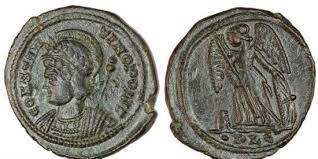
In July 1996, the United Kingdom passed the “Treasure Act”, which made detailed provisions for the protection of historical and research-worthy cultural relics. However, a large part of the historical relics discovered by the public does not belong to this category of cultural relics. In order to strengthen the protection of these “treasures” cultural relics, the Department of National Heritage (DNH) and the Museum and Art Gallery Committee (MGC) jointly announced that they would start operating the UK’s largest public archaeological project to date in September 1997.
Project-Portable Antiquities Scheme (PAS). Since its inception in 1997, tens of thousands of archaeological relics have been discovered every year. One of the more famous cases is that Terry Herbert used a metal detector to find 1,500 treasures in farmland in Staffordshire, England. It can be described as the largest Anglo-Saxon gold in British history. Treasure; In addition, David Crisp used a metal detector to find about 52,000 ancient Roman coins near the town of Flams in Somerset, England. This is so far The second greatest discovery during the Roman period in England. According to the 2010-2011 annual report of the Movable Cultural Relics Program, 92% of the treasures and cultural relics registered this year were discovered by metal detector users. In addition, the program’s liaison officer (mainly responsible for recording and publishing information on archaeological relics to enhance the interaction between the public, metal detectors, archaeologists, and museums) also maintains regular contact with 199 metal detection clubs. And participated in 927 meetings organized by the club. The Movable Cultural Relics Project has greatly stimulated public interest and enthusiasm in archaeology. Through metal detectors, the public can also make important contributions to archaeology and history. The widespread application of metal detectors in British public archaeology has also led to high-end metal detection. Research and development of the device.
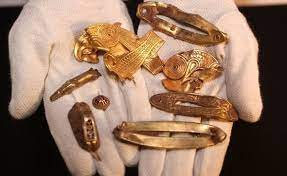
In the United States, metal detectors also play an important role in the field of public archaeology. In 1985, the American “treasure hunter” Mel Fisher and his underwater treasure hunting team used metal detectors to conduct underwater searches. After 16 years, they finally found the sunken ship “Mrs Atoka”. This 17th-century Spanish shipwreck full of treasures contains about 40 tons of treasures, including nearly 8 tons of gold and 500 kg of gems. In 1982, Mel Fisher also founded the MelFisher Maritime Heritage Society under his own name. Its purpose is to display and protect important marine archaeological discoveries. Most of it The exhibits come from the donation of Mel Fisher[11]. Now, metal detection clubs composed of American metal detector enthusiasts spread across 50 states in the United States. There are also many magazines that introduce treasure hunting with metal detectors, such as American Digger Magazine and Gold Prospectors Magazine.), Lost Treasure Online, etc.
Texas Association of Metal Detecting Clubs, TAMDC for short) is one of the representative metal detection clubs in the United States. Its purpose is to unite, promote and encourage the Texas Metal Detection Club through education and guidance. TAMDC currently has 16 member clubs including the Austin Metal Detection Club, East Texas Treasure Hunters Association, Central Texas Treasure Club, Southwest Search, and Golden Triangle Explorers Association. It has formulated 13 ethical codes for clubs and members, including rules such as respecting the rights and properties of others, observing the law, not destroying historical buildings, and not destroying the original land and vegetation. In fact, it can also be regarded as the use of metal detection by the public. Code of conduct for the device.
Further reading


Leave a comment